Last week, I finished the September intensive program and spent five days in the Pays Basque! The Basque Country is a region in southern France that extends into Spain, where the Basque people have been living since at least the 6th century and have created their own language, gastronomy, and culture. The Basque language (Euskara) is completely unique and the origins are unknown, but it existed only in oral form until the 16th century. All the transportation and information signs are in French and Basque. The landscape is beautiful as it encompasses the foothills of the Pyrenees and the coast of the Atlantic Ocean. Basque nationalist pride is strong and there are some who would like to become an autonomous nation, notably the ETA terrorist group on the Spanish side. The French portion is peaceful, but I did see “Liberty for the Basque Country” signs, as well as many flags. I started researching the region and dreaming about the sea and mountains before I even arrived in France.
Saint Jean-de-Luz, the Rhune (mountain peak)
I was lucky to travel with Wenonah, who shared my view of hygiene during a trip (showers are not necessary every day, wearing the same exercise leggings three days in a row is okay), my passion for adventures (camping, going on somewhat grueling hikes in the mountains), and finally an enthusiasm for the superior French gastronomy.
After three trains to get to Biarritz, we spent the night in a hostel and headed early in the morning for Saint Jean-de-Luz, a port city of approximately 19,450 people, just south of Biarritz. We took a bus to a campsite just at the edge of town, unloaded our bags, and spent about two hours hiking a seaside trail back to the Centre Ville. The path was along the edge of a cliff and set the theme of spectacular views for the rest of the trip.
Atlantic Ocean, view from the path
Herbe de Pampas, protects against wind and erosion, from Argentina
Beach at Saint Jean-de-Luz, the Rhune in background
During the afternoon we passed a couple hours at the not-too-crowded beach; the weather was perfect—very sunny, but not too hot. After the beach, we explored the numerous adorable little boutiques. We also made plans to hike the “Rhune” the next day, a symbolic mountain of the Basque region because it is half in Spain and half in France, and also the real start of the chain of Pyrenees.
Sunset on the beach
It rained all night, but we stayed dry in our little tent and woke up early the next morning to start our adventure. We walked to town (about 30 minutes) and took a bus to the Col de Saint Ignace at the base of the mountain. There is a little train that goes to the top that has been running since 1924, but we hiked the trail which took about 3 hours. The hike was more difficult than I expected, even though the sign said “Medium-Difficult”, because it was very steep. However, we hiked through herds of cows, sheep, goats, and horses and enjoyed stunning views of the sea, mountains, and little Basque houses spotting the hills in the distance. There were no other people on the trail; cowbells were the only other sound.
magnifique!
Me and W
herds, summit with antenna
sheep, view of Saint Jean-de-Luz in background
At the summit, Wenonah and I relished a picnic lunch while perched on the lookout point and gazing into Spain. AMAZING! The weather was also perfect—a little overcast and cool, but not cold or rainy. The descent wasn’t too bad; it took about two hours, but my knees hurt a bit because it was so steep. There were no dull moments between Wenonah and I amusing ourselves and the spectacular scenery. At the bottom, we hiked down a little road and snacked while admiring the Basque farm houses from a closer point of view.
Summit! above the clouds, Spain in the background
playing with the animals on the descent
The evening was spent wandering around St. Jean-de-Luz, walking on the beach, and dining on seafood.
Port at night, the Rhune
Port at night
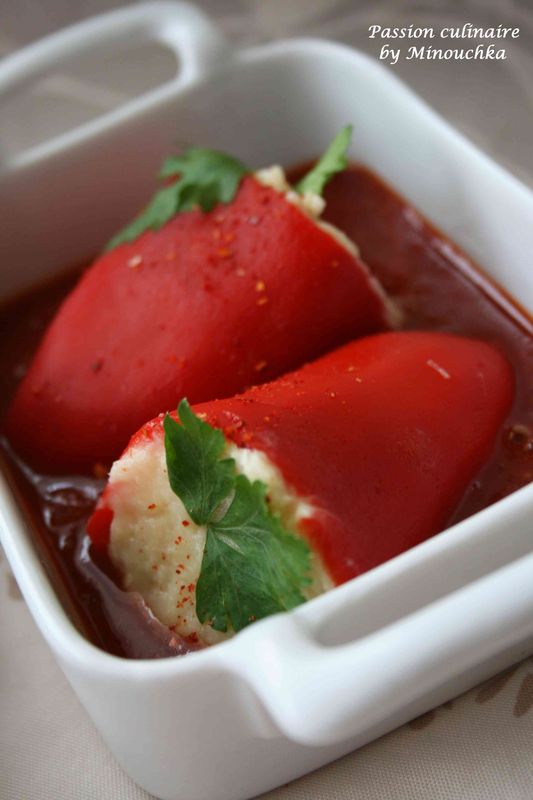
I’m not usually a seafood fan; but when one is in restaurants where all the “fruits de mer” comes from about 100 yards away, it’s necessary to go a little out of one’s comfort zone and eat like the locals. Wenonah and I feasted each night at little cafés/restaurants; and I tasted chipirons (calamari), moules (muscles), crevettes (shrimp), morue, and merlue (both fish). My favorite dish was Piquillos Farcis à la Morue (red peppers stuffed with a mixture of the fish and a sauce). Because St. Jean-de-Luz is only several kilometers away from Spain and the Basque Country crosses the border, there is a huge Spanish influence on the cuisine. I also got to try Paëlla (saffron-seasoned rice with seafood, chicken, and chorizo), and a couple Spanish beers and wines. Out of the whole trip, the best food was definitely in St. Jean-de-Luz. Another specialty of the region is fromage de brebis (cheese made from sheep’s milk) with confiture de cerises noires (black cherry jelly). The combination is excellent and both products are made in the region (of course). I’ve realized on this trip that the United States is missing the tradition and pride of eating foods from the region that is vital in France. The country is very agricultural (unlike the popular image of Paris), and the people eat locally not to be chic and eco-friendly, but because it is their custom. When one lives and travels in France, it is crucial to indulge in the local specialties to really experience the region.
Piquillos Farcis à la Morue
Paëlla
We left for Saint Jean-Pied-de-Port Friday morning. To get to this little mountain town of population 1400, we took a one-car train that wound through the mountains next to a white-water stream. St. Jean-Pied-de-Port reminded me of a village in a Disney princess movie, because it was so charming with old buildings, cobblestone streets, ramparts around the Centre Ville, and little river running through the middle.
Feeling confident after conquering the Rhune the day before, we decided to go on another hike in the afternoon. The city is a base for a Christian pilgrimage through Spain and part of France called the trail of Saint Jacques de Compostelle. We hike part of the trail that went around the valley and then up a mountain through farms. It took about 2 ½ hours to get to the top and wasn’t as steep as the Rhune, except for the last stretch before the summit. All along the way, we were once again surrounded by the astounding beauty of the region, and at the top could see St. Jean-Pied-de-Port in the distance. After the hike, we saw a sign for the farm at our destination that said 7 km, so I guess that makes our little afternoon adventure about 14 km, or 8.7 miles.
along the trail
more cows!
faux-pilgrims, Saint Jean-Pied-de-Port in the background
I love the mountains!
That night we were a little fatigued and loopy and laughed way too much while eating dinner in a garden behind a restaurant/cidery. We camped again for the night, at a site just inside the old ramparts. The next morning we spent relaxing, eating breakfast, drinking coffee at a little café, and savoring the fresh mountain air before going back to Biarritz in the afternoon.
evening
Arriving in Biarritz, we were a little depressed after our few days in Paradise with hardly any people, absolutely no Americans (!), and no standards for cleanliness or appearance. But to remedy our blues, we spent the afternoon/evening at the beach. Apparently Biarritz is the surfing capital of Europe because there was a surfing competition and the beach was packed with people. These were the definitely the biggest waves I have ever seen and Wenonah and I were a little scared to go in the water at first. But we had already pinky promised, so we waded through the water, barely able to stand in the tide. We made it to a spot a little ways out where it was easier to stand and one could survey the incoming waves; we were the only girls among many men. The waves tossed us around and threw us under water, but we caught onto the idea of diving under the waves just before they hit. Perhaps this game was a little dangerous, but we were laughing so hard and enjoying the adrenaline rush. We also had a better view of the surfers. So we stayed out there for about an hour and a half. It was awesome! I would love to spend a couple weeks in Biarritz learning how to surf, and then continue into the Pyrenees to do more hiking/camping/backpacking …hmmm…honeymoon/future dream vacation to return to Pays Basque…
WAVES!
I cannot describe the trip as less that perfect because I felt so comfortable in the towns and countryside, had such a good time with Wenonah. I enjoyed talking to the French people of the region, and was in love with the sea, farms, and mountains. It was a unique opportunity to see a real part of France not visited by many foreign tourists, but very popular among the French in Summer. The “country” was so isolated and pure in culture and tradition. It was definitely a very “Betsy” vacation; I was in Paradise!
To see more of my photos, browse my Facebook album!
Friday after lunch I went with my school to Anjou Troglodytique. Anjou is the ancient name of my region (now referred to as Maine et Loire) and Anjou Troglodytique (“troglos”) refers to many small villages/houses around the area that are underground! These caves were dug by poor farmers in the middle ages to quarry stone that they then sold to build the châteaux (castles), églises (churches), and other larger houses. Thus, they had enough money to pay their neighbors to help and the creation of these underground houses was a community event. The village I visited was fascinating—the rooms were separate and one had to go “outside” to get to another, but they were all under the farm; even the stables for the animals were underground. People inhabited this village until the 1930s!
Underground house
Inside a stable
Kitchen
After the troglo village, we toured a wine cave at Veuve Amiot. They use the same process that is used in the production of champagne, but name “Champagne” can only be used for wine coming from that region. The caves were moldy and damp, but the wine was pretty good—we sampled a blanc, rose, and rouge. However, I have to say that this was no comparison to my first wine tasting in the small countryside vineyard.
Wine in the cave
Wine tasting with friends
Wine tasting with my French "monitrices" and the director of my program :)
After dinner, we made a quick pit-stop at the Château de Saumur. We spent about an hour picking grapes from the vineyards in front of the castle, exploring the moat and the grounds, and admiring the view of the Loire River.
Château de Saumur
View of the Loire from the Château
Finally, we went to a restaurant in a cave! The region is also known for mushrooms that are cultured in caves, so we ate mushrooms at each course of the meal. By far the best mushrooms I’ve ever had (even though I didn’t like mushrooms as a kid), extremely flavorful and they were cooked in very interesting ways. The restaurant also made little bread balls (I guess these would be called rolls) in a fire oven visible from the table. Delicious mushrooms+fresh bread continuously brought to the table+more wine+new friends=a contender for the best meal of my life.
Dinner in the cave
Saturday I went to the beach of a little river called “Le Loir” (not to be confused with “La Loire”, which it connects to) with Madame, Jean, and Wenonah. We swam a bit, even though it was pretty cold, played pétanque (a French game with metal balls, similar to Bocce), and badminton. Afterwards, we visited a small château on the banks that was really more like a big house, but still beautiful and with a gorgeous view of the green fields that the Loire Valley is famous for.
On Sunday, I woke up early to go on another fieldtrip with my school to three castles in the Loire Valley. The day started with a stunning sunrise over the Loire River. Unfortunately, I don’t have a photo of this but try and imagine fog over the fields, an enormous orange sun, and the reflection on the Loire—magnifique! The first stop was the Château d’Azay le Rideau, a castle built in 1523 for Martin Berthelot, the mayor of Tours and treasurer for King François I. The inside was decorated in Renaissance style. My favorite parts were the staircase in the middle, the many open windows, the moat, and the grounds behind the castle. This was definitely the most peaceful out of the three as it was the smallest and had the least amount of tourists.
Behind the Château d’Azay le Rideau with my friends
Next was the Château de Chenonceau (wikipedia site), which was also constructed in the 16th century. King Henry II gave the castle to his favorite mistress Diane de Poitiers, who designed the garden on the left (east). After he died, his wife Catherine de Médicis was regent and forced Diane to leave. Catherine then planted the garden on the right (west). The weather was absolutely perfect for strolling around the gardens, and I preferred that of Diane on the east side. The interior was very extravagant with many paintings, furniture pieces, and tapestries.
Château de Chenonceau
Side view, on the Cher River
In the garden of Diane de Poitiers
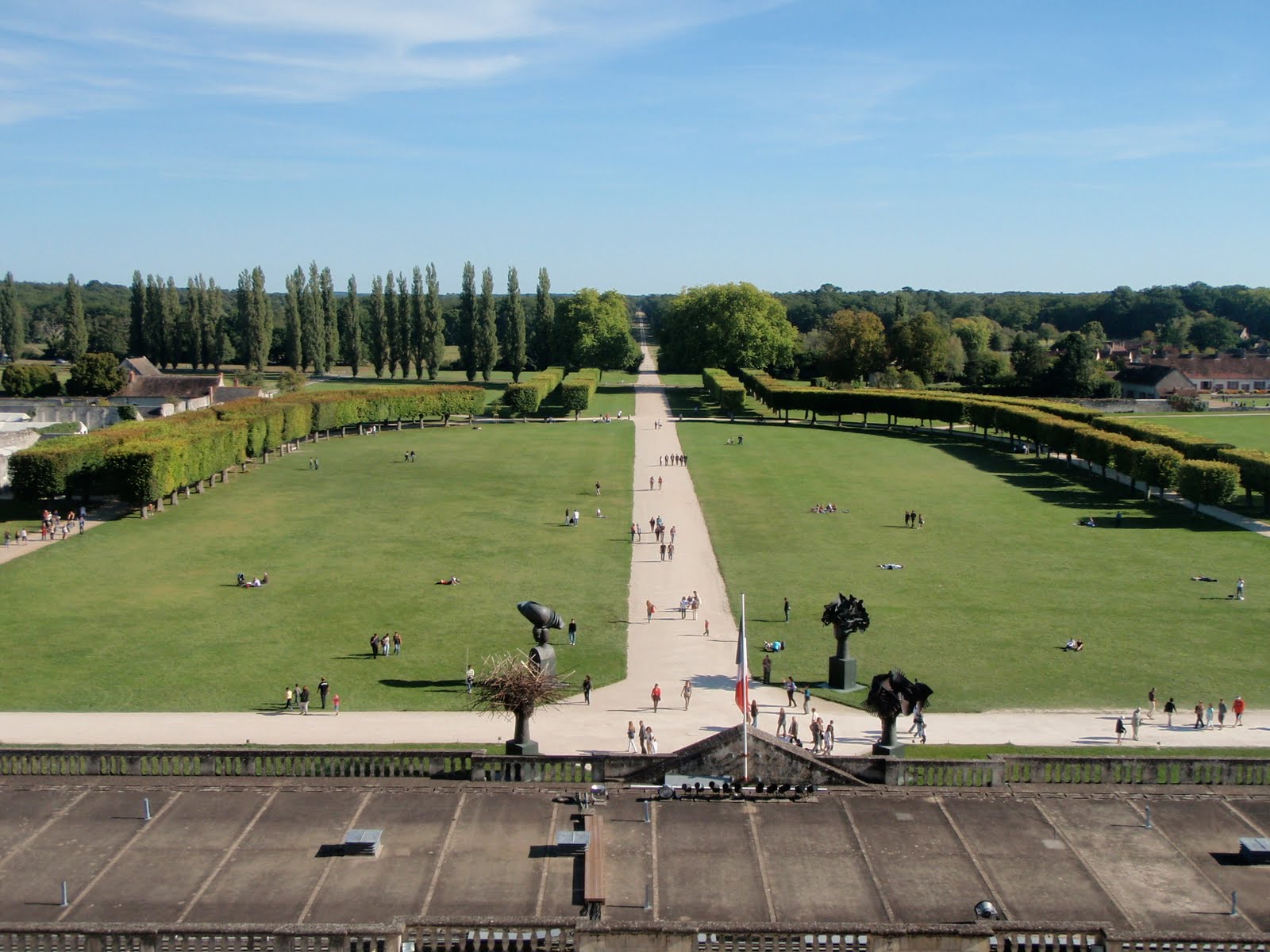
The last castle was the Château de Chambord (wikipedia site), which was also built in the 16th century Renaissance style—absolutely spectacular. King François I was the first inhabitant and he used it for hunting grounds, but Louis XIV is another famous King to spend time there. The castle comprises 77 staircases, 282 chimneys, and 426 rooms. The central double staircase is especially famous because it was suggested by Leonardo da Vinci to François and consists of two staircases that wind around each other without meeting. I didn’t spend as much time in the rooms here, as I was a little overwhelmed by the quantity. However, I especially enjoyed the third floor, which featured many modern art works and a special exhibit on the castle in WWII, during which it was occupied and guarded by soldiers. At the beginning of the war, the Mona Lisa was sent there for safe-keeping, as well as many other important art works such as the drawings of Leonardo de Vinci and Pisanello. I also enjoyed the view from the top of the expansive grounds. This château was my favorite because the history was extremely interesting and the castle itself was incredible. Châteaux count for the weekend: five.
Château de Chambord, from the back
Paintings I liked on the third floor
Photo during WWII
The Mona Lisa being moved to the castle
View from the top, famously long entry drive
On a balcony
In the few days back at my normal life this week, I’ve been occupying myself with school work and planning for my vacation to the Pays Basque with Wenonah next week! I had one especially bad mishap at dinner Monday night… I was trying to ask Madame if she wanted me to put the plastic wrap (“le film”) on the rice, but accidentally said “le fion” instead. Le fion is an old bad word referring to, pardon my French (haha), a chicken’s asshole. Madame started cracking up and we were all on the verge of peeing our pants once she could explain what I had said. Oops!
If you made it to the end of this epic post, thank you for reading! Lots of love!